Field research · Toss
FacePay
What makes someone hesitate the first time they pay with their face?
- Role
- FacePay Onboarding Assistant · Viva Republica (Toss)
- Period
- Jun – Aug 2025
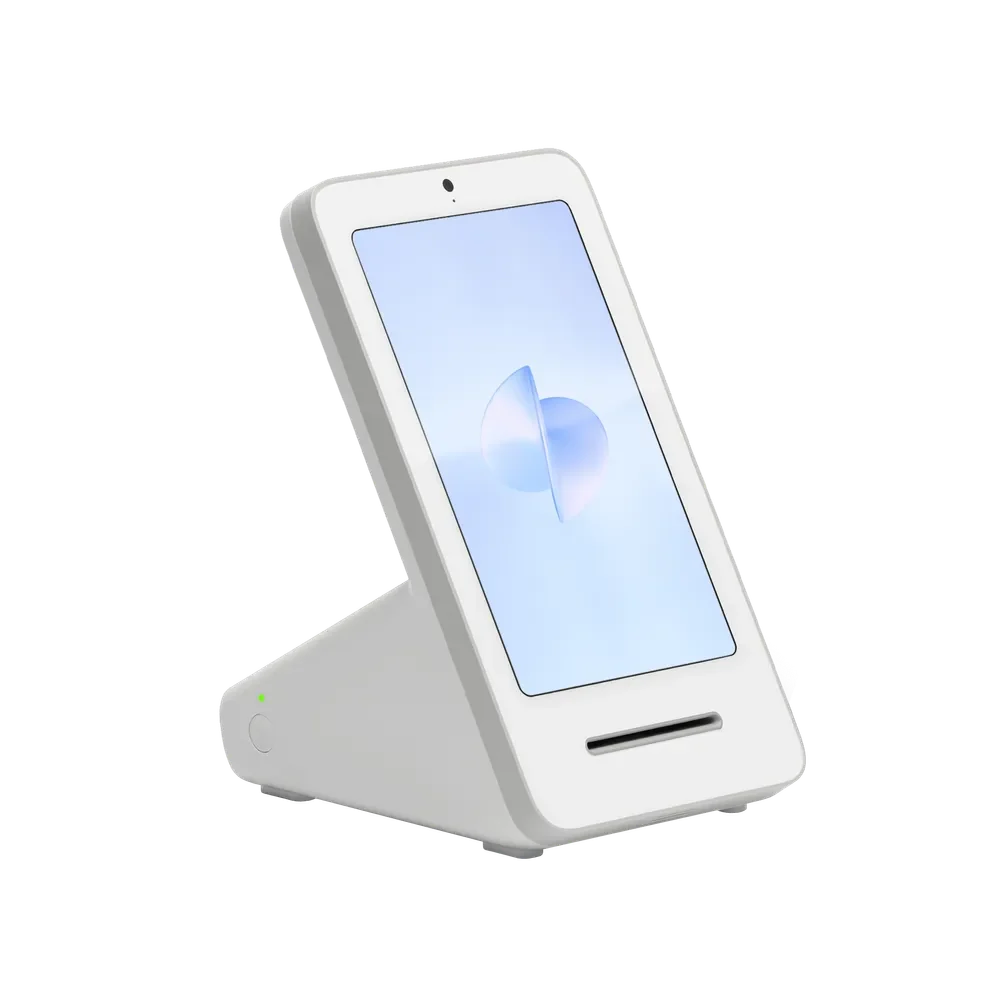
Facial recognition works in a lab. The question is whether it survives a real shop at lunchtime — counter heights, light from the window, a queue building behind, and an owner asking why it isn’t working.
My job was to record that reality and hand it back in a form the engineering team could act on.
The owner said there was no problem. The slowed-down device was simply left as it was.
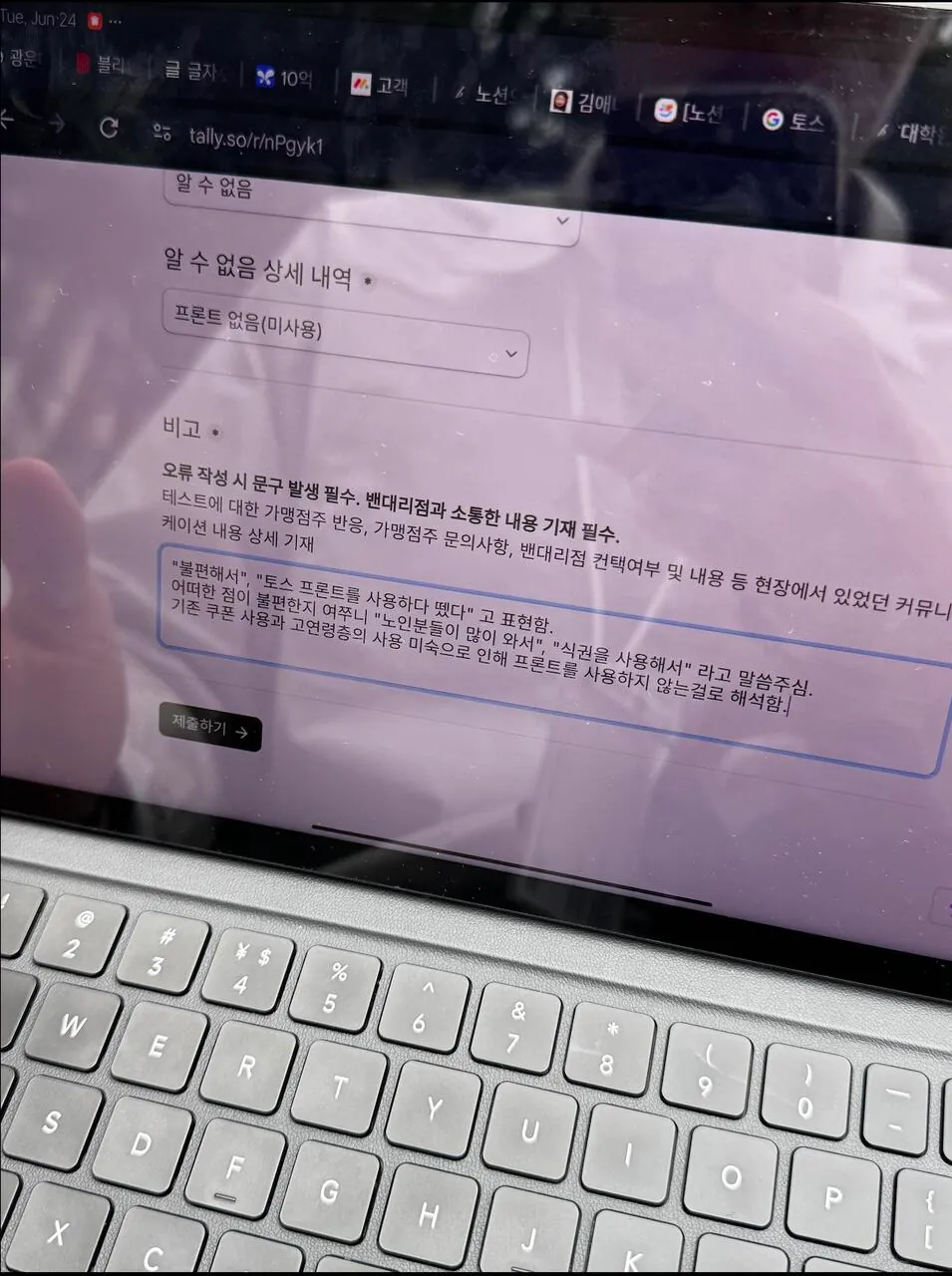
That is why I did not rely on surveys or interviews. Owners said nothing was wrong, yet when the device slowed down they had no idea how to fix it and simply left it. Customers said it was convenient, but a drunk customer trying to pay with a friend’s face is not something anyone says out loud.So I embedded in the shops and recorded what people did, not what they said.
Method
- 01Field observation
First-time use, observed in more than 100 live shops
- 02Journey mapping
Before, during and after payment, with owner and customer behaviour logged separately
- 03Stress testing
Hardware and software tested against only the variables that kept failing in week one
- 04Merchant conversations
Collecting recurring issues and finding the pattern
- 05Issue relay
Weekly reports with photos and video, and an urgency × impact priority matrix, sent to engineering
One moment, friction on both sides
- Owner, when the device slows down. No idea how to fix it, so it is left. “I’ll just leave it, it’ll sort itself out…”
- Owner, when a restart is needed. Cannot find the restart button on screen. “Where do you even turn it off?”
- Owner, when changing a setting. Each device is configured differently. “If only there were one central setting, like iOS…”
- Customer, while recognition runs. No progress is shown, so they keep staring at the screen.
- Customer, the moment it charges. It feels as if it paid without their say. “But I didn’t press confirm?”
- Customer, someone else’s face. Drunk, trying to pay with a friend’s face.
What I saw in week one decided what to test
- Lighting Recognition failed noticeably more at window seats. Tested under daylight, fluorescent light and dim conditions.
- Counter height Shorter customers’ faces fell outside the camera. Tested with users of different heights.
- Face angle Some customers tried to pay while looking at their phone. Tested head-on, in profile, and tilted up and down.
- Device state Devices left on for a long time slowed down. Tested performance after long uptime.
What I observed
It was not “lighting”. It was direct sunlight.
I first put the window-seat failures down to the window. Grouped by time of day, they were bad only between 3 and 5 pm, when the sun came straight in.
I reported the variable split from “lighting” into “direct sunlight or not”, and it went into the criteria for choosing test stores.
When the screen stalls, the owner reaches for the old terminal
When recognition lagged, merchants instinctively reached for the existing card terminal — the very device FacePay was meant to replace.
“Wait time” was reframed from a technical metric into an interruption of how the shop actually runs.
Biometric payment trades convenience against exposure
A face is an credential you cannot rotate. I raised that irreversibility as a user-side risk, set against the convenience it buys.
Failure points, by priority
| Priority | Problem | Proposed fix |
|---|---|---|
| P1 | Recognition progress is invisible, so trust drops | A progress animation |
| P1 | It charges without the person confirming | An optional second PIN the user can turn on |
| P2 | The restart control is hard to reach | Expose the restart button; restart automatically |
| P2 | Settings scattered across devices | Centralised settings management |
A design proposal: show the state honestly
A proposal translating the observation back into a screen. If an invisible state is what creates the anxiety, then making the state visible is the first fix.
얼굴을 인식하고 있어요
70%
A static spinner becomes a ring with a percentage
A “recognise → confirm → done” rail
“Please wait…” becomes “We’re recognising your face”
A face authenticates; it does not consent — so confirm before charging
이 결제가 맞나요?
₩5,800
아메리카노 외 1건
김대은님 얼굴로 결제
토스페이 · 신한 ****1234
아니에요, 취소할게요