
Daeeun (Dan) Kim
김대은 · HAI · HCAI research · Seoul
Some people have ideas.
Some people build products.
I build proof.
I research Human–AI Interaction (HAI) and Human-Centered AI (HCAI). I observe people in the field, then build the screen that tests what I saw. I distrust flattering numbers first — and retract my own findings when they don’t hold.
Method
Read what people can’t say, then build it to find out
Ask people what they want and the narrating mind answers; the deciding mind is what opens the app on a Tuesday night. The two do not line up. I treat that gap as the design brief rather than as noise: what people name, I write down — what they contradict, I build around.
- 01
Start where demand is already proven
People in a new category have no words for what they want. People already paying for the same desire somewhere else do. So I start from demand that is already being paid for, not from demand I have imagined.
- 02
Split the desire, find the layer nobody solved
A stated desire is usually several layers compressed into one sentence. Split it and the solved layers separate from the untouched ones. Only the untouched ones are worth building.
- 03
Ask it as one line of ad copy, before building
Ad copy is the most disciplined writing I know: one line has to name a desire, and if the hypothesis is wrong the line collapses. Collapsing it before the code is cheaper.
- 04
Write down what the test settled — and what it didn’t
A high click-through proves the copy named a real desire. It does not prove the product satisfies it. Conflating the two corrupts everything that follows, so every test ends with two lists: what it settled, and what it did not.
Research in progress
- Under submission
How adults with ADHD endure and interpret silence from an AI
When an AI does not answer straight away, what does a person fill that gap with? The work looks at how adults with ADHD experience and make sense of response latency. (Title and scope may change through review.)
Work
What building taught me
Each project starts as a question, and records the attempt to answer it with screens and data.


Writing
Publishing the numbers that failed
- 18 Nov 2025Bootcamp (UX Collective)
My Fake Door Test Got a 16.5% CTR… and a 2.47% Conversion Rate. Here's What I Learned.
The raw data from a three-pronged fake-door test, and an autopsy of why the clicks soared while sign-ups collapsed.
- Dec 2025Bootcamp (UX Collective)
I Killed My Darling (Again): How Legal Nightmares and Bored Users Forced a B2B Pivot
How two walls — legal constraints and bored users — pushed a B2C game into a B2B data business.
- May 2026Medium
I Don’t Build Products. I Architect Desire.
Four apps, one method: decomposing the gap between what users name and what they mean, building inside it — and the layer he argues AI cannot replace.
- May 2026Medium
The Three Desires Underneath Every Viral Comment
The three desires beneath the things people say when they predict a trend — and how to put them on a screen.
About
If I’m curious, I build it to find out
In secondary school I was listening to music and wondered which instrument was making which sound when several played at once. That single question turned into an instrument-classification algorithm — and it set how I treat technology: build the thing to find out.
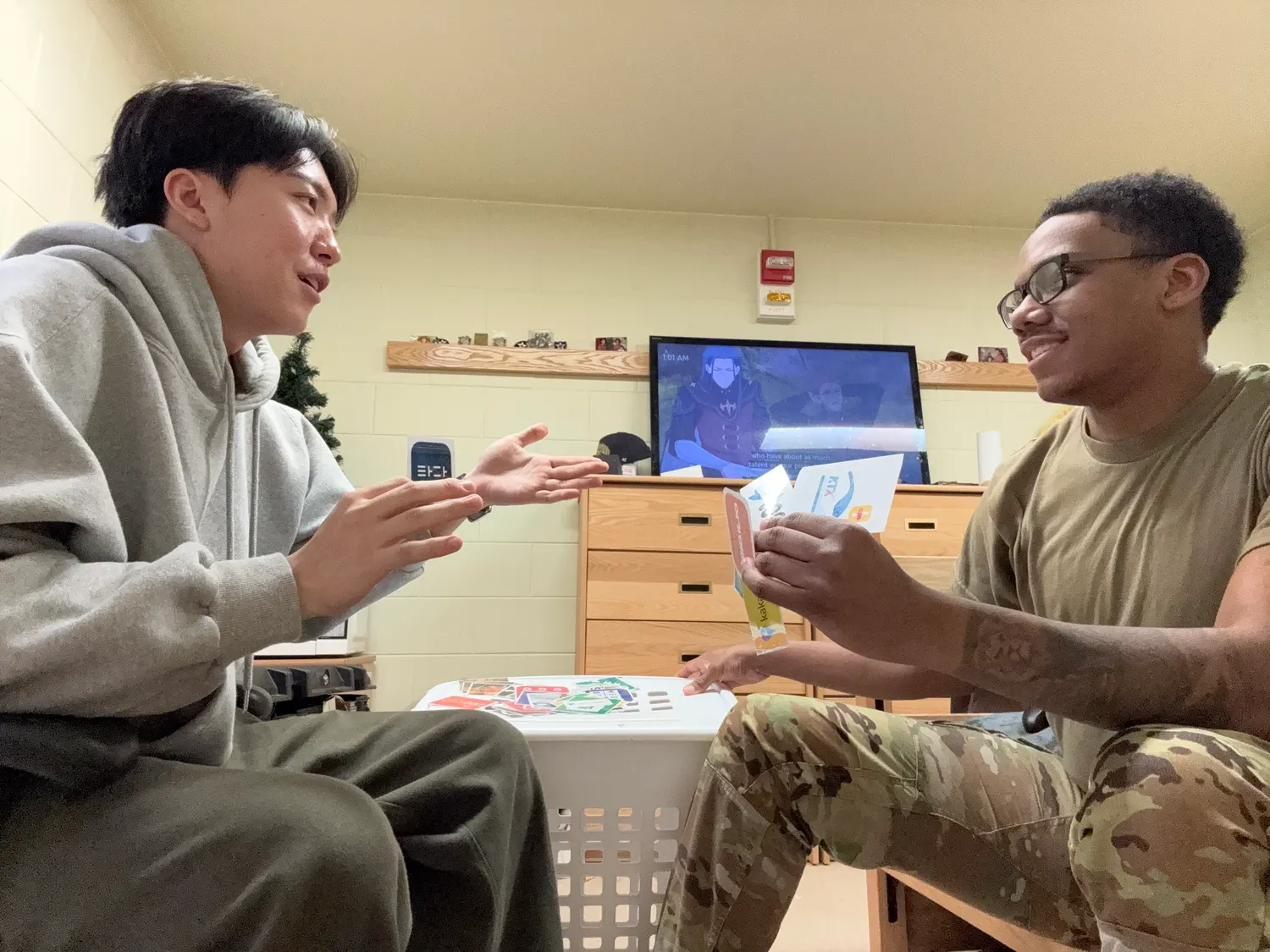
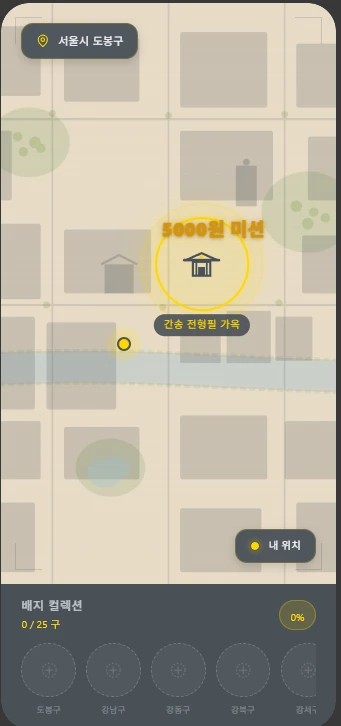
The same habit had me counting the tactile paving in my district — 40% of it was failing — and, over two years inside a U.S. Army base, watching where foreigners get stuck paying for things in Korea. Now I watch how people and AI actually get along.
I build screens and I try to break my own conclusions. When a 38-second dwell time turned out to be 1.5 seconds, I retracted all six affected metrics instead of quietly correcting them. I don’t know another way for research to earn trust.
Education
- Kwangwoon UniversityMar 2023 – Present
B.S. in Data Science, School of Information Convergence
- Daejeon Daeshin High SchoolMar 2020 – Feb 2023
Daejeon, Republic of Korea
Studio
For someone worldwide, we make something
We dwell in the process, not the product. See, build, see again.
- TremerCase study
Someone who watches 90 minutes of shorts a day and remembers none of it
- BeffCase study
Someone who finds people heavy, but being alone heavier
- Noein
Someone who wants to raise an AI that thinks like them
- LiveLike
Someone who can't know if a job fits them until they've lived it
Press
- Naeil Education weekly2023
2023 Early-Admission Interview — Daeeun Kim, Software Talent track, Kwangwoon University School of Information Convergence
Print feature in the Korean education weekly Naeil Education, covering his secondary-school projects — an instrument-classification algorithm, scooter safety, and receipt-ink waste
- Jaesu-Eopda (Naeil Education)2023
2023 Early-Admission Interview Series — Daeeun Kim, Kwangwoon University, School of Information Convergence
Naeil Education’s dedicated early-admissions site. Part of its rolling interview series, covering how he prepared for the comprehensive-review interview
Contact
If the work needs someone to go and watch people, I’d like to talk.
A lab, a product team, an early startup — the shape doesn’t matter, so long as the screens are built on evidence from the field.